
How Burnout Scores the Body
The hidden cost that ambitious women pay

“I just got on with it.”
“I came back to work after 2 weeks”
“You just have to keep going.”
In my work as a feminine embodiment coach, these are the kinds of things I would hear women say when they spoke about navigating stressful events, including grief. I could not help but wonder what it costs the body to live like that. On the surface, it sounds like strength. Resilience. The capability to withstand and continue. The more I observed this, the more I began to see that what may have looked like strength was, in many cases, self-abandonment.
In a system that prioritises output, success, and constant forward movement, no matter the costs, it becomes something to admire. “I carried on. I didn’t fall apart. I didn’t stop.” It becomes a kind of badge of honor. In doing so, we begin to sever our ability to respond to ourselves with humanity and compassion. We deny ourselves the space to process, to feel, to adjust. Instead of integrating the experience, we focus on how quickly we can move past it.
Playing with fire
It was 2024. I was doing my master’s while working a job, and when I look back, the two together were already a recipe for disaster. I was overworked beyond my limit. “I just need to get through the next few months, then I can relax,” is what I would often tell myself. Just as I thought I could handle it, a curveball in my personal life threw me into oblivion.
Lights shut out! It felt like my heart was out of my body. I wasn’t sure if it was still beating. My brain felt like it was collapsing. All my senses were on high alert; I could not handle even a basic question. I work in higher education, and I remember two students were trying to get my attention. It was like my brain was splitting into pieces. I panicked and knew something was drastically wrong. It is hard to maintain a professional persona when you feel like your spirit is shutting down. A student asked if I was ok, and I knew from then on, my face could no longer hold the impression of ‘I’m fine’. So, I called a doctor. I hardly visit the doctor, even when I’m sick, but on this occasion, it felt different; I needed an SOS. I was immediately signed off and had 3 months off work.
Look out for the drivers
As a second-generation South Asian woman, there’s an unspoken baseline of success, an expectation to do more, be more, prove more out of survival. When you come from a background where stability and wealth aren’t guaranteed, that pressure sharpens. The desire for what success can bring is also driven by survival. It becomes tied to responsibility and proving worth through achievement, especially after witnessing struggles you do not want for yourself. So, you learn to override your body’s signals by negotiating; one more bar, one more time, one more day, one more late night. You learn that self-sacrifice becomes the currency you trade for safety, approval, and progress. You keep going. Until your body decides otherwise.
This is how burnout starts. It is rarely the result of one severe event. It is an accumulation of self-sacrifice built over the years before the collapse becomes visible. When it does, it becomes difficult to make sense of where it began.
You wrestle with the strong, powerful part of yourself, the one that has stood through the wildest storms and is still standing. You ask yourself: how did I get here? It is the realisation that you are human, not a machine, and the body is saying: enough!
Every woman has her burnout story and what led her there. We often act on the surface: what we need, what we want, what we think will fix it, rather than addressing the source. Understanding the drivers matters because it moves you beyond individual events and towards a clarified root.
When I trace mine back, I begin to understand it less as a single decision and more as an internal operating system shaped early. Coming from a divorced family, people in my wider family and community were explicit in what they believed my brother and I would become. Projections of limitation were repeated, that we would amount to nothing. I was even told I would become nothing more than a prostitute because of my family’s divorce status. I was 12 years old. In my case, the driver for worthiness became the need to resist the story that was already set out for me.
There is also the matter of scarcity. The way finances were used to control and limit the women I grew up around meant the desire for financial autonomy became tied to safety. I learned I needed it for protection. That became the base ingredient for a way of working at a speed that eventually overtook my capacity. I have done it before, so why can I not do it again? And so, I did.
“I was even told I would become nothing more than a prostitute because of my family’s divorce status.
I was 12 years old”.
Some frame burnout as a boundary issue, which assumes a level of control that isn’t always there. It is not only work that drives this, but the accumulation of emotional, relational, and internal pressures that extend far beyond it. There is a misconception that burnout is simply the result of everyday stress. While the symptoms are real, burnout is a build-up of sustained emotional and physiological strain that compounds into something far more severe. It starts as constant fatigue, difficulty focusing, irritability, brain fog, forgetfulness, emotional flatness, or a sense of running on empty even after rest. Over time, it intensifies until the burn takes you out.
The undercurrent that lives beneath the drivers is shame. Rest is for lazy people. Rest is unproductive. Rest is not attractive. Rest risks progression. Rest risks job security. Shame permeates these beliefs, so we keep performing an image of capability.
Across many industries, we are already seeing more people step away from work due to burnout and high pressure. The question is not only whether we should leave; it is whether we have ever been allowed to rest in the first place. Do we need to quit, or are our bodies calling for rest?
Rest is rarely met with pleasure. It is treated as a chore or a reward, and even then, it is often met with guilt that begs us to justify it.
What begins to emerge through burnout is a recognition that something in the way we are taught to operate is unsustainable. The real shift is not learning how to keep going differently but allowing rest to exist without it needing to be earned.
Are you ready for change?
If you are struggling with burnout or seeking guidance in recovery, my 4-week Soul Vision Plan supports you in changing the patterns that keep you in cycles of burnout and exhaustion, helping you move towards a more grounded and sustainable way of living.
Book here.

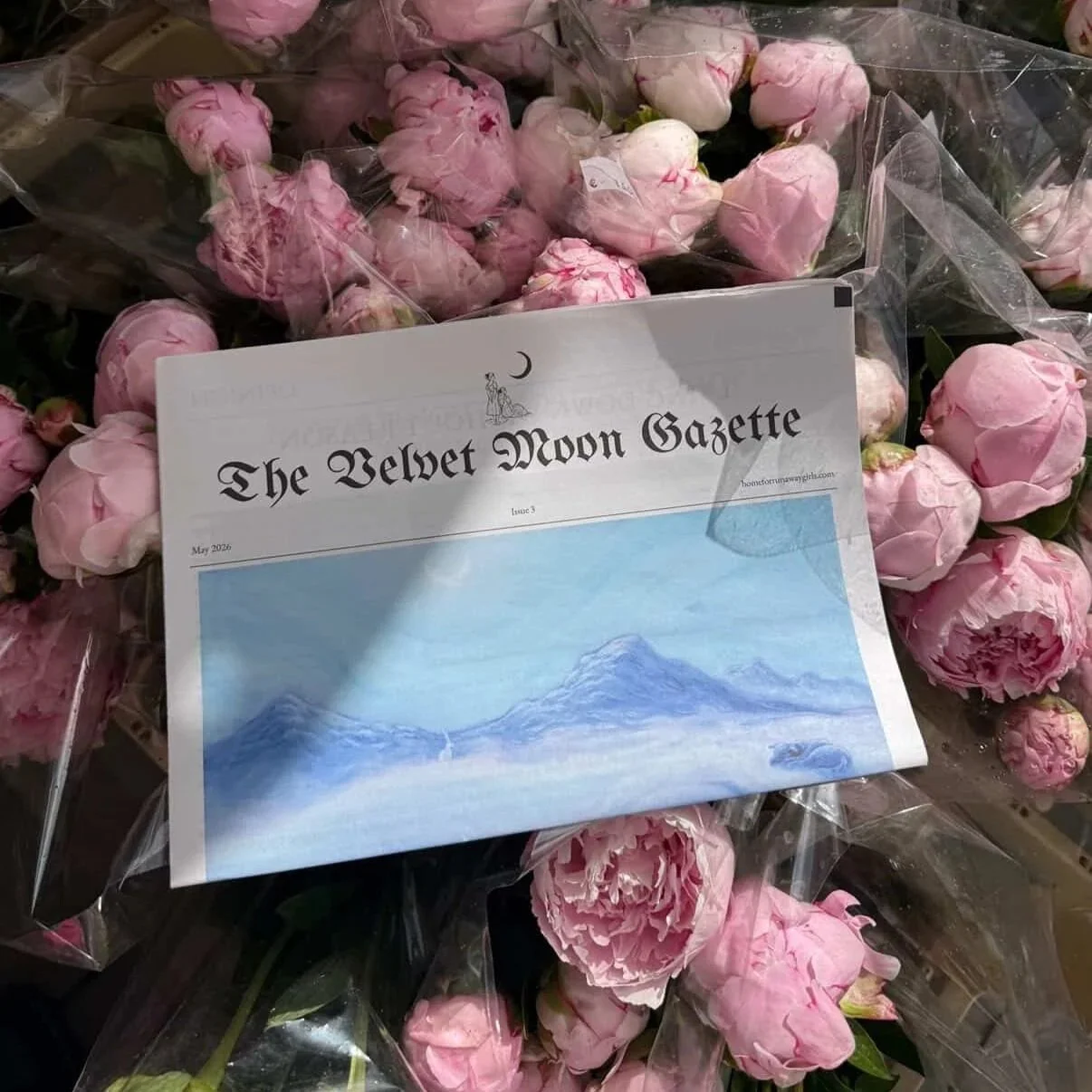
As featured in The Velvet Moon Gazette